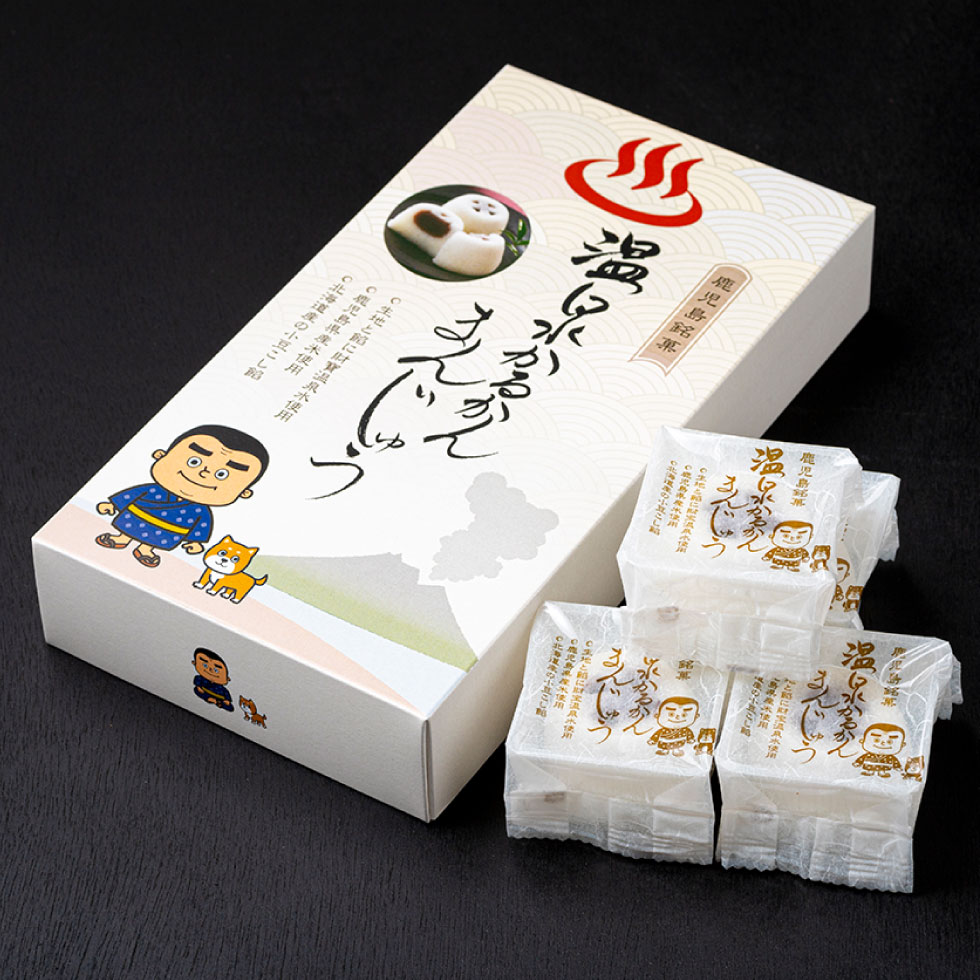
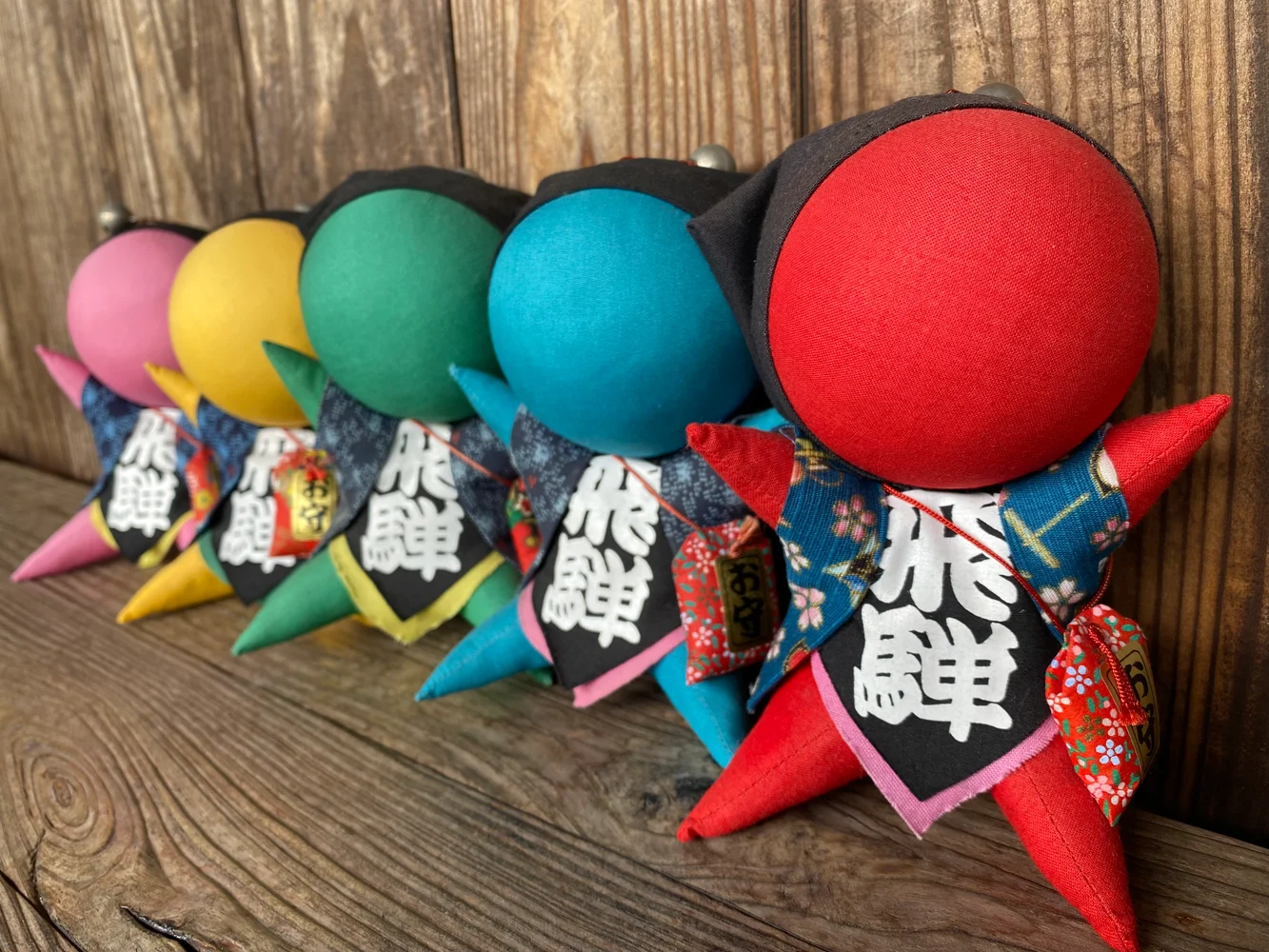
Kumamoto
Top Kumamoto souvenirs and must-visit travel spots — your complete guide for visitors to Japan. From the majestic black castle to the steaming caldera of Mt. Aso — Kumamoto’s scale is volcanic, its flavors are fierce, and its famous mascot bear is irresistible.
黒く聳える熊本城、世界最大級の阿蘇カルデラ、そして日本一愛されるゆるキャラ・くまモン。熊本は何もかもがスケールが違う。
Kumamoto is Kumamon’s home — the rebuilt black castle, the steaming Mt. Aso caldera, and Kurokawa’s onsen village. Its souvenirs are ikinari-dango sweet-potato dumplings, Kumamon sweets, karashi-renkon mustard lotus root, and kuma rice shochu. Most keep well. Kumamoto Station and the airport carry them.
熊本はくまモンの故郷——再建された黒い城、噴煙の阿蘇カルデラ、黒川温泉。みやげはいきなり団子、くまモン菓子、辛子蓮根、球磨焼酎など。多くが日持ちします。熊本駅や空港で揃います。
Recommended Omiyage
おすすめおみやげ 5選
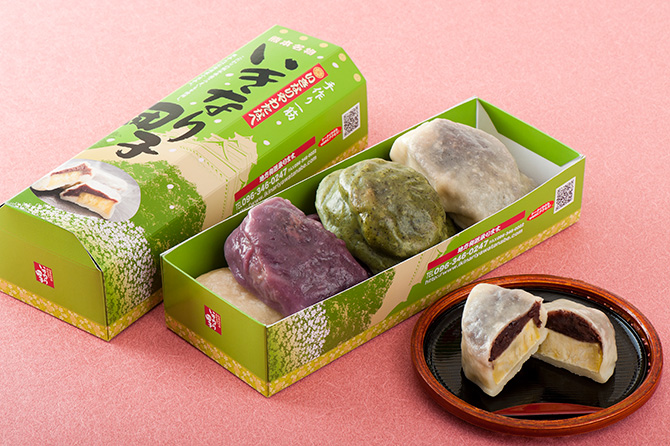
Ikinari Dango
Ikinari Dango is one of Kumamoto’s most distinctive sweets — its name (“sudden dumpling”) references the dish’s quick-and-rustic origins, when farmers would prepare it as an impromptu snack for unexpected visitors. Each piece consists of a slice of sweet potato wrapped with red bean paste in a soft, slightly chewy mochi-style wheat-flour dough, then steamed. The result is a hearty, lightly sweet snack with three distinct textures: chewy outer dough, smooth red bean paste, and the sweet, soft-cooked sweet potato in the center. The flavor is satisfying and earthy, perfect with strong green tea. Top makers include Choujuan and Higoya, both specialist shops making them by hand. Modern variations include matcha-infused versions and chocolate-coated variants. Best within 5-7 days; refrigerate. Available at JR Kumamoto Station, Kumamoto Airport, and Kumamoto City shops.
「いきなり団子」は熊本県を代表する独特な郷土菓子——名前(「いきなり」とは「急に・即席で」の意)は料理の素早く素朴な起源を反映しており、農家が突然の来客に対する間に合わせのおもてなしとして用意したのが始まりとされています。一つずつ、甘い小豆あんを巻き付けたサツマイモのスライスを、柔らかくほんのり噛みごたえのある餅状の小麦粉生地で包み、蒸し上げて完成。仕上がりは満足感のある、優しい甘さの3層の食感——もちもち外生地、上品なこしあん、甘くて柔らかい中のサツマイモ——が見事に調和。風味は素朴で土の香りがあり、濃いめの緑茶との相性が格別。代表メーカーは「長寿庵」「肥後屋」など、専門店が手づくりで展開。賞味期限5〜7日、要冷蔵。JR熊本駅、熊本空港、熊本市内のお店で広く販売。
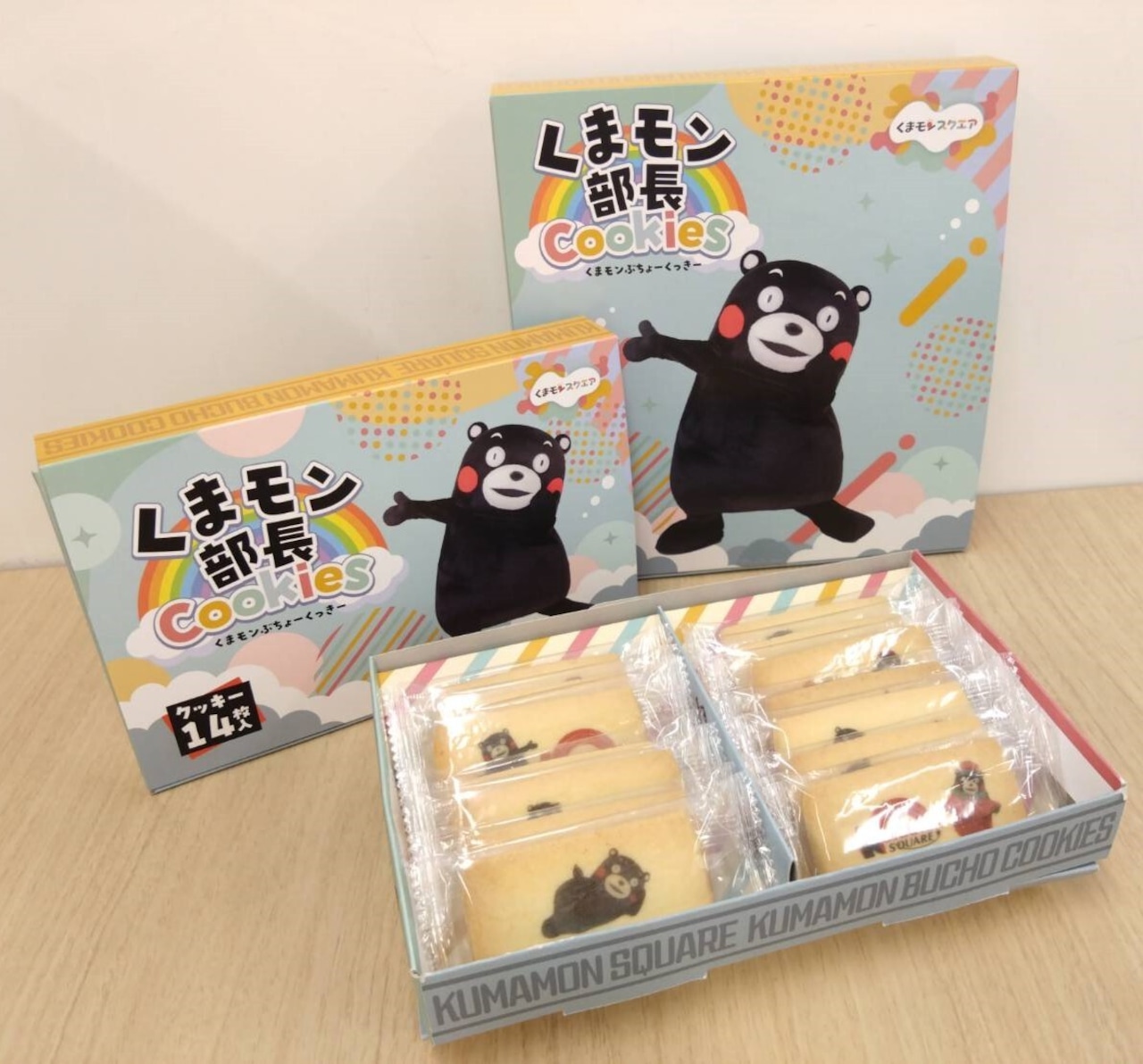
Kumamon Cookie
Kumamon, the official mascot of Kumamoto Prefecture (a chubby black bear with rosy cheeks created in 2010 to attract tourism after the 2011 Kyushu Shinkansen opened), has become Japan’s most internationally beloved mascot. Kumamon Cookies feature the iconic mascot’s adorable face stamped onto buttery shortbread cookies, sometimes with edible chocolate eyes for extra detail. The cookies are sold in elegant tin boxes featuring different Kumamon poses (smiling, dancing, eating sushi, etc.), making them both a delicious snack and an Instagram-worthy gift. These are made by many licensed makers; the official Kumamon Square shop sells the ‘Kumamon Bucho Cookies’ shown here. Modern variations include matcha, chocolate-coated, sakura-flavored, and seasonal limited editions. Boxed gift versions in 6, 12, 18, or 24 pieces are sold at JR Kumamoto Station, Kumamoto Airport, and the dedicated Kumamon Square shop.
「くまモン」は熊本県の公式マスコット——2010年に九州新幹線開業後の観光誘致のために創作された、丸々したフォルム、黒い体、ピンクの頬が特徴の愛らしい黒熊で、現在は日本でも国際的に最も人気のキャラクターの一つに成長しました。「くまモンクッキー」は、マスコットの愛らしい顔をバター香るショートブレッドクッキーに刻印した名物——時には食用チョコの目を別途あしらう細やかな仕上がりも。様々なポーズ(笑顔、踊り、寿司を食べるなど)のくまモンが描かれた化粧缶で販売されており、美味しいおやつと、インスタ映え抜群の贈答品の両方の魅力を備えています。数多くのライセンス製造元が手がけ、公式の「くまモンスクエア」では画像の「くまモン部長クッキー」を販売。現代バリエーションには抹茶、チョコレートコーティング、桜風味、季節限定版など多彩。JR熊本駅、熊本空港、専門ショップ「くまモンスクエア」で販売。
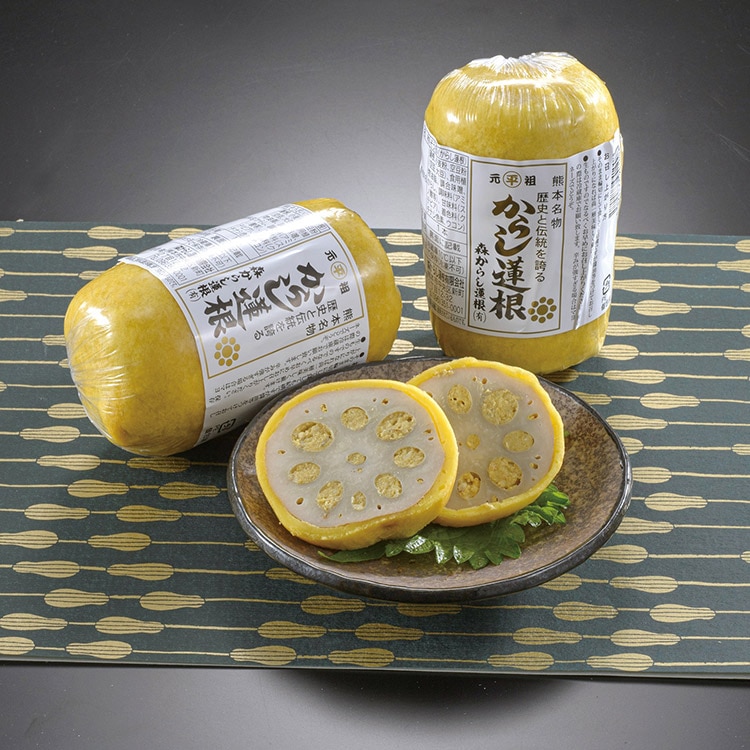
Karashi Renkon
Karashi Renkon is one of Kumamoto’s most distinctive savory delicacies — lotus root (renkon) hollows are filled with a rich miso-and-Japanese-mustard (karashi) paste, then dipped in soft batter and deep-fried until golden brown. The result is a crisp-soft contrast: the outside is shatter-crisp from frying, the lotus root is tender-crisp, and the miso-mustard filling provides a complex, slightly fiery, deeply umami flavor. The dish was reportedly created in the 17th century as a remedy for Lord Hosokawa Tadatoshi’s illness — the strong mustard was believed to support digestion. Top makers include Mori Karashi Renkon (which claims the original lineage; shown here) and other Kumamoto producers. Each piece is individually vacuum-sealed for travel. Best within 30 days unopened. Pair with cold beer or Kuma shochu. Available at JR Kumamoto Station, Kumamoto Airport, and major Kyushu depachika.
「辛子蓮根(からしれんこん)」は熊本県を代表する独特な郷土料理——蓮根の穴に、濃厚な味噌と日本のマスタード「からし」のペーストを詰め込み、柔らかい衣をまぶして黄金色に揚げた絶品です。仕上がりは、サクッとした外の衣、シャキッとした蓮根、複雑でほのかにピリ辛、深い旨味の味噌からしフィリングが織りなす絶妙な食感のハーモニー。料理は17世紀、細川忠利公の病気治療として開発されたと伝わり、強烈なからしが消化を助けると信じられていました。代表メーカーは元祖を名乗る画像の「森からし蓮根」など、熊本の各社。一つずつ真空パックで、お土産に最適。未開封で賞味期限約30日。冷たいビール、球磨焼酎との相性は格別。JR熊本駅、熊本空港、九州の主要デパ地下で広く購入可能。
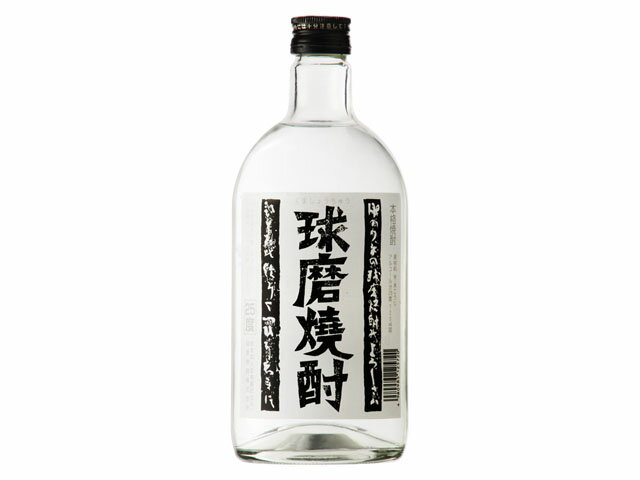
Kuma Shochu
Kuma Shochu is Kumamoto’s most prestigious distilled spirit — produced exclusively in the Kuma region of southeastern Kumamoto, where the pure Kuma River water and locally-grown rice combine to create a rice-based shochu of extraordinary refinement. Unlike sweet potato or barley shochu, Kuma’s rice-based version (made from the same rice used for premium sake) has a clean, slightly fruity character with subtle umami and a long, refined finish. Top makers include Hakutake (Takahashi Shuzo) and Sengetsu (founded 1903), among the Kuma region’s 27 GI-certified distilleries. Many distilleries offer free tours and tasting flights of 5-10 shochus. The Kuma region’s brewery tourism (kura tourism) lets visitors explore several historic distilleries in one day. Pair Kuma shochu on the rocks, with hot water (oyu-wari), or in modern cocktails. Available at JR Hitoyoshi Station, JR Kumamoto Station, and major Kyushu depachika.
「球磨焼酎(くましょうちゅう)」は熊本県を代表する蒸留酒——熊本県南東部の「球磨地方」のみで、清冽な球磨川の水と地元産米を素材に、卓越した洗練度の米焼酎として生み出されます。サツマイモや麦焼酎と異なり、球磨の米焼酎(プレミアム日本酒と同じ米を使用)は、清らかで微かにフルーティーな風味、控えめな旨味、洗練された長い余韻が特徴。代表蔵元は「白岳(高橋酒造)」、「繊月(1903年創業)」など、球磨地方のGI認定27蔵。多くの蔵元で無料の蔵見学と5〜10銘柄の利き酒セットが楽しめます。球磨地方の「球磨焼酎蔵ツーリズム」では、1日で複数の歴史ある蔵元を巡ることもできます。球磨焼酎はロック、お湯割り、現代風カクテルとして楽しめます。JR人吉駅、JR熊本駅、九州の主要デパ地下で購入可能。
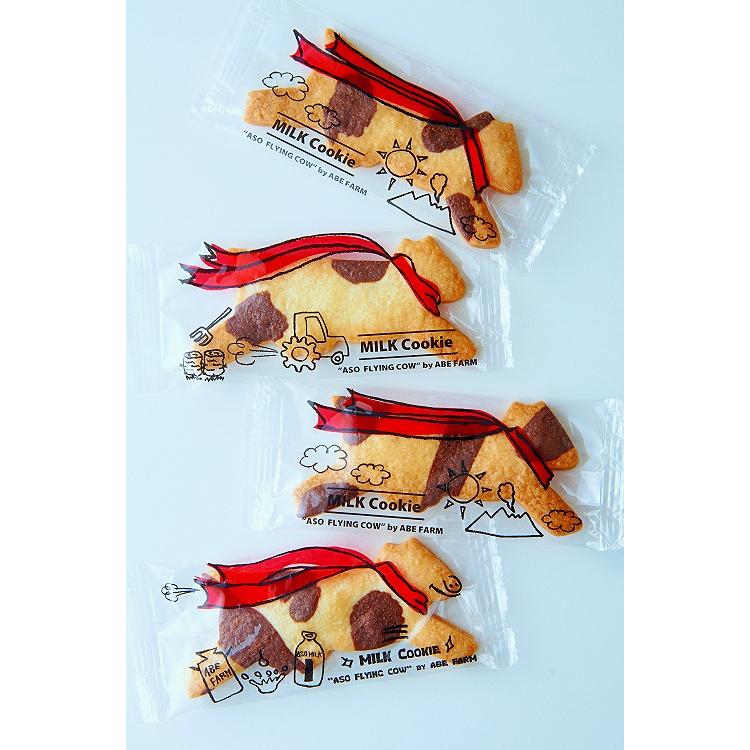
Aso Milk Soft Cookie
Aso, Kumamoto’s vast volcanic plateau, is one of Japan’s most prestigious dairy regions — the lush highland grasses and pristine spring water produce milk with extraordinarily concentrated flavor and natural sweetness. Aso Milk Soft Cookies are luxurious confections made from this premium milk, featuring soft, slightly chewy textures that melt in the mouth and a rich, almost ice-cream-like creaminess. The cookies smell distinctly of Aso milk — vivid and slightly grassy. The maker is Abe Farm (the ‘Aso Flying Cow’ brand shown here), with elegant traditional packaging. Modern variations include butter-and-honey, matcha, and seasonal fruit-flavored versions. Best within 30 days unopened. Pair with strong coffee or hojicha tea. Available at JR Kumamoto Station, JR Aso Station, Kumamoto Airport, and Aso Plateau visitor centers.
熊本県の広大な火山台地・阿蘇は、日本でも最も格式高い酪農地——豊かな高地の牧草と清冽な湧水が、卓越した風味と自然な甘味を持つミルクを育てます。「阿蘇ミルクソフトクッキー」は、このプレミアムミルクから作られる贅沢な銘菓——柔らかくほんのり噛みごたえのある食感、口の中でとろけるような繊細さ、ほぼアイスクリームのような濃厚なクリーミーさが魅力です。香りは紛れもなく阿蘇ミルクそのもの——鮮やかで、ほんのり草の香り、深く満足感のある風味が広がります。製造元は画像の「阿部牧場(ABE FARM/”ASO FLYING COW”)」。優雅な伝統パッケージで展開。現代バリエーションにはバター&はちみつ、抹茶、季節の果実風味なども多彩。未開封で賞味期限約30日。濃いめのコーヒーやほうじ茶との相性が格別。JR熊本駅、JR阿蘇駅、熊本空港、阿蘇高原の観光案内所で購入可能。
Must-Visit Spots
おすすめスポット 5選
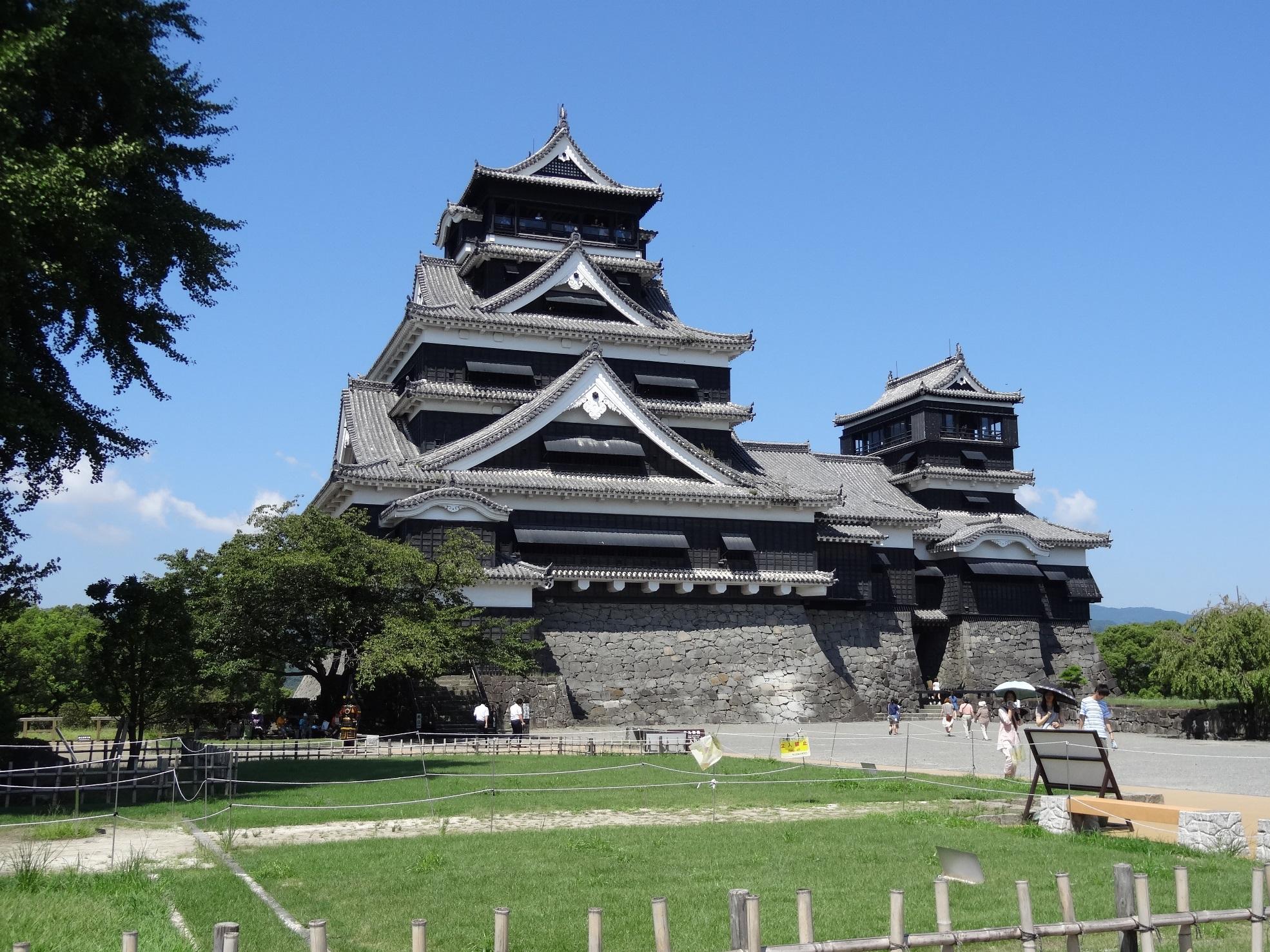
Kumamoto Castle
Kumamoto Castle is one of Japan’s three great castles (often listed alongside Nagoya and Osaka) and one of the country’s most architecturally impressive — built in 1607 by Kato Kiyomasa using cutting-edge defensive engineering of his era. The castle’s signature feature is its steeply curved ‘musha-gaeshi’ stone walls of immense scale and precision, creating overlapping fields of fire that made it nearly impossible to assault. The original keep was destroyed by fire in 1877 during the Satsuma Rebellion (the keep was used as a fortress against Saigo Takamori’s forces), and was reconstructed in 1960. The 2016 Kumamoto earthquake severely damaged the castle, but extensive restoration efforts (still ongoing in 2026) have restored most of the keep and surrounding walls. Tickets ¥800. Cherry blossoms in early April are spectacular. From JR Kumamoto Station, take the tram (15 minutes).
「熊本城」は名古屋城・大阪城と並ぶ日本三名城——1607年に加藤清正が当時最新の防衛工学で築城した、日本でも建築的に最も印象的な城の一つです。象徴的な特徴は、巨大かつ精密な「武者返し」の石垣で、重複する射界を形成し、攻撃を実質的に不可能にする巧妙な設計が見事。オリジナル天守は1877年の西南戦争(西郷隆盛軍に対する要塞として使用された)で焼失し、1960年に再建されました。2016年の熊本地震で城が大きな被害を受けましたが、大規模な修復(2026年現在も継続中)で天守と周囲の石垣の大部分が復元されています。入場料800円。4月上旬の桜は格別の絶景。JR熊本駅から路面電車で約15分。
Mt. Aso
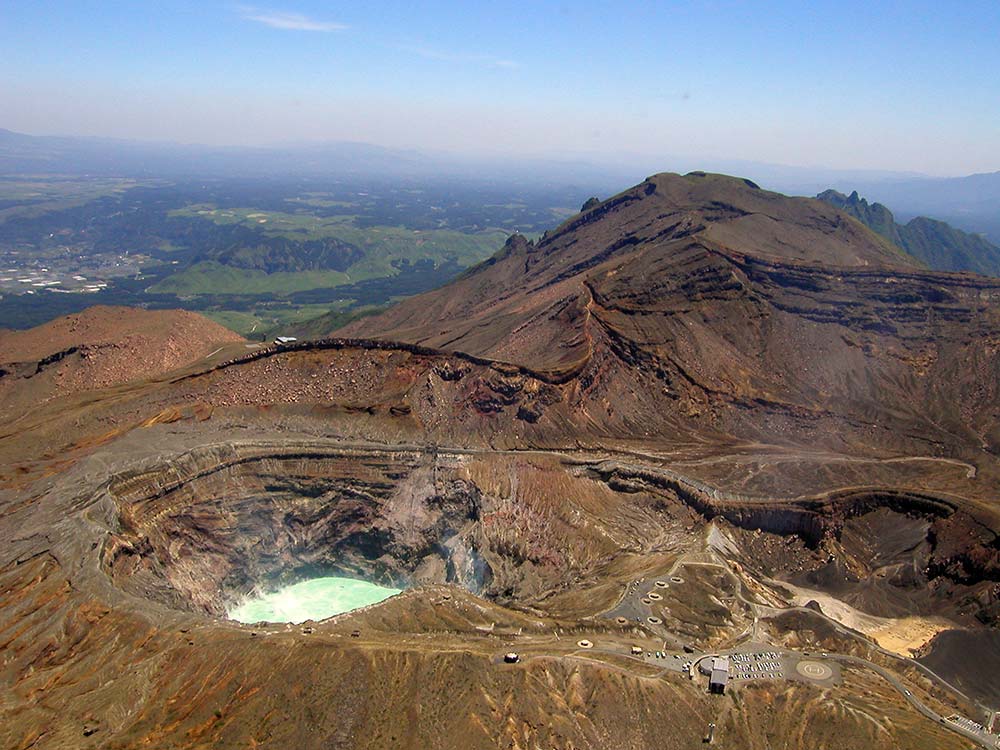
Mt. Aso is one of the world’s largest active volcanic calderas — its 24-km diameter contains five major peaks including the still-active Nakadake (which often emits smoke), making it Japan’s most dramatic volcanic landscape. The drive across the Aso Caldera passes through one of Japan’s most beautiful alpine plateaus — vast green grasslands dotted with grazing horses, emerald streams, and unforgettable mountain panoramas. The signature view is from Mt. Eboshi Plateau, with sweeping panoramas across the entire caldera. Visitors can walk the Sunasenri ash plain near the crater, take the crater shuttle bus (when conditions permit), and visit the Aso Volcano Museum for vulcanology education. Be aware of volcanic activity warnings — Nakadake’s crater is sometimes inaccessible. Best from late April through October. From JR Aso Station, the major sightseeing points are 30-90 minutes by car or bus.
「阿蘇山(あそざん)」は世界最大級の活火山カルデラ——直径24kmのカルデラ内に活火山の中岳(しばしば噴煙を上げる)を含む5つの主要山頂を擁する、日本で最もドラマチックな火山景観を提供します。阿蘇高原の阿蘇内牧から阿蘇山へ向かうドライブは、日本でも最も美しい高原の一つを横断——広大な緑の草原に放牧馬が散り、エメラルドの渓流、忘れられない山岳パノラマが連続する絶景コースです。象徴的な絶景は「烏帽子岳(えぼしだけ)」の広大な草原台地からのカルデラ全景。訪問者は火口近くの「砂千里ヶ浜(すなせんり)」散策、火口コンディションが許せば火口シャトルバス、阿蘇火山博物館の火山学展示などを楽しめます。火山活動警報には注意——中岳火口は閉鎖されることがあります。ベストシーズンは4月下旬〜10月。JR阿蘇駅から主要観光地まで車またはバスで30〜90分。
Kurokawa Onsen
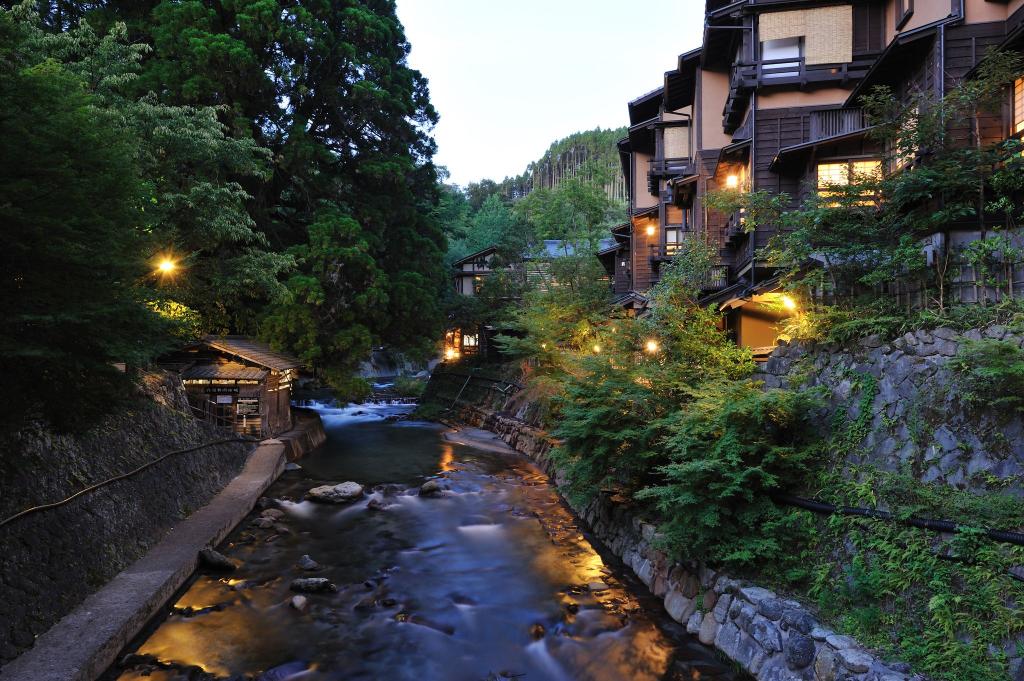
Kurokawa Onsen is one of Japan’s most beloved hot-spring villages — a charming wooden-bath cluster nestled in a forested mountain valley, where around 30 traditional ryokan offer outdoor baths overlooking the Kurokawa River. Unlike larger commercialized onsen towns, Kurokawa has preserved its quaint, intimate character through strict zoning rules: no neon signs, all buildings must use traditional wooden architecture, and electric wires are buried underground. The signature experience is the “Nyuto Tegata” wooden pass (¥1,500), which lets visitors enjoy any 3 of the participating ryokan’s outdoor baths in a single day — a brilliant way to experience varied hot-spring traditions while staying at a different inn. The village is particularly stunning in winter when steam rises through snow. From JR Beppu Station, Kurokawa is 90 minutes by JR + bus; the slower scenic route through Aso is more enjoyable.
「黒川温泉(くろかわおんせん)」は日本でも最も愛されている温泉郷——森の山間の谷に佇む木造の湯屋の集落で、約30軒の伝統旅館が黒川川を望む露天風呂を提供します。大型の商業化された温泉地と異なり、黒川は厳格な景観条例(ネオンサイン禁止、伝統木造建築のみ、電線地中化など)で、その素朴で親密な雰囲気を保ち続けています。象徴的な体験は「入湯手形」(1,500円)で、加盟旅館のうち任意の3軒の露天風呂を巡ることができる仕組み——別の旅館に宿泊しながら、多様な温泉の伝統を体験できる優れた制度です。冬の雪景色の中に湯気が立ち上る光景は格別。JR別府駅から黒川まで列車+バスで約90分、阿蘇経由のゆっくり絶景ルートも人気です。
Nabegataki Falls
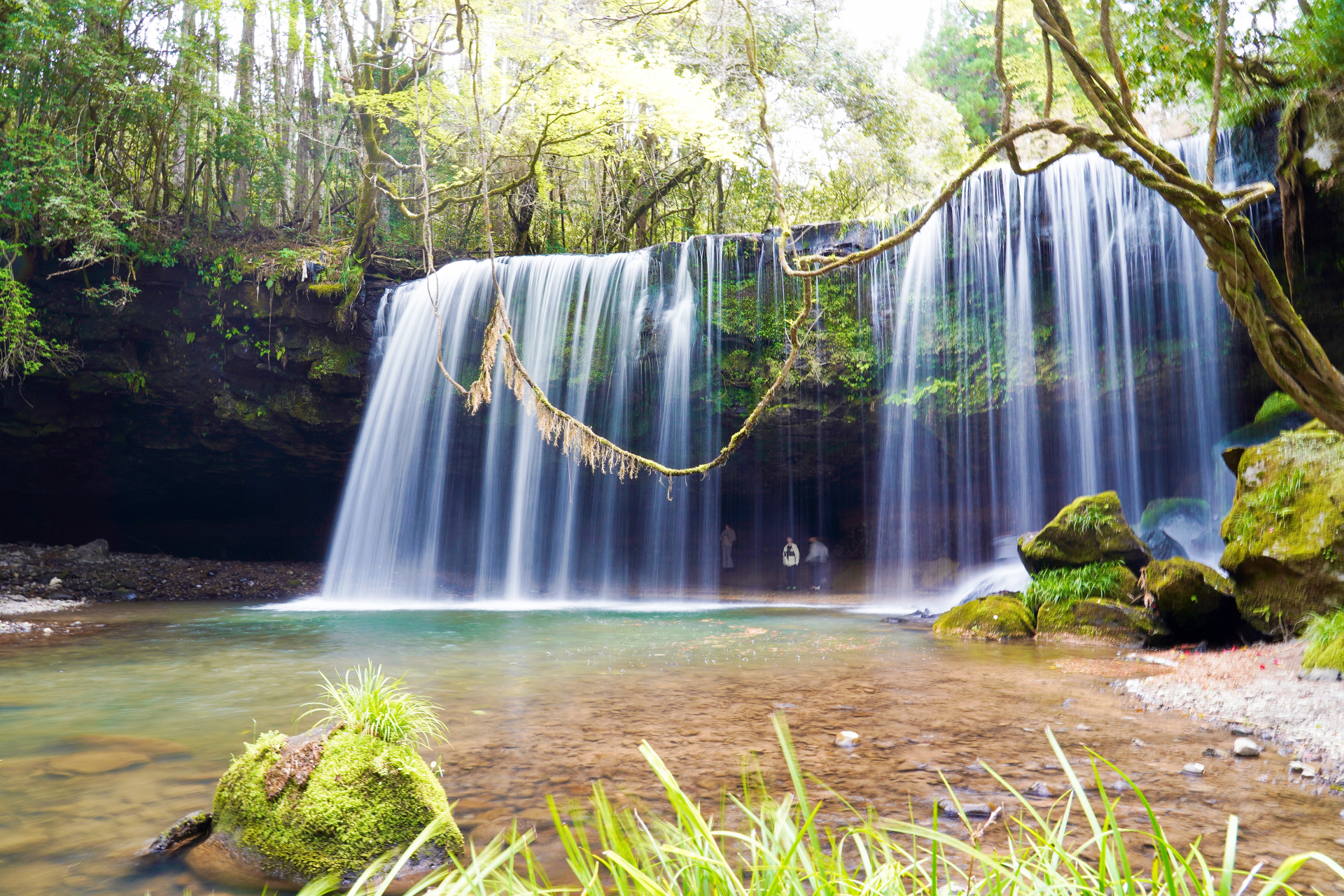
Nabegataki is one of Kumamoto’s most enchanting waterfalls — a wide, gauzy curtain of water about 10 meters high and 20 meters across, set in a lush, mossy ravine in Oguni Town near Kurokawa Onsen. Its most famous feature is that you can walk behind the falls, looking out through the shimmering water curtain — an experience made famous by a national green-tea TV commercial. The cave-like hollow was carved by erosion from the massive Aso pyroclastic flows tens of thousands of years ago. The falls are especially lovely with fresh spring greenery and autumn colors. Entry requires an advance online reservation (¥300). About 30 minutes by car from the Kurokawa Onsen / JR Aso area.
「鍋ヶ滝(なべがたき)」は熊本県でも屈指の美しい滝——高さ約10m・幅約20mのカーテンのように広がる優美な滝で、小国町の苔むした渓谷(黒川温泉の近く)にあります。最大の見どころは滝の裏側を歩けること——きらめく水のカーテン越しに外を眺める体験は、全国放送の緑茶CMで一躍有名になりました。この洞窟状のえぐれは、約9万年前の阿蘇火砕流の浸食で形づくられたもの。新緑や紅葉の時期が特に美しい。入園は事前のネット予約制(¥300)。黒川温泉・JR阿蘇エリアから車で約30分。
Suizenji Jojuen Garden
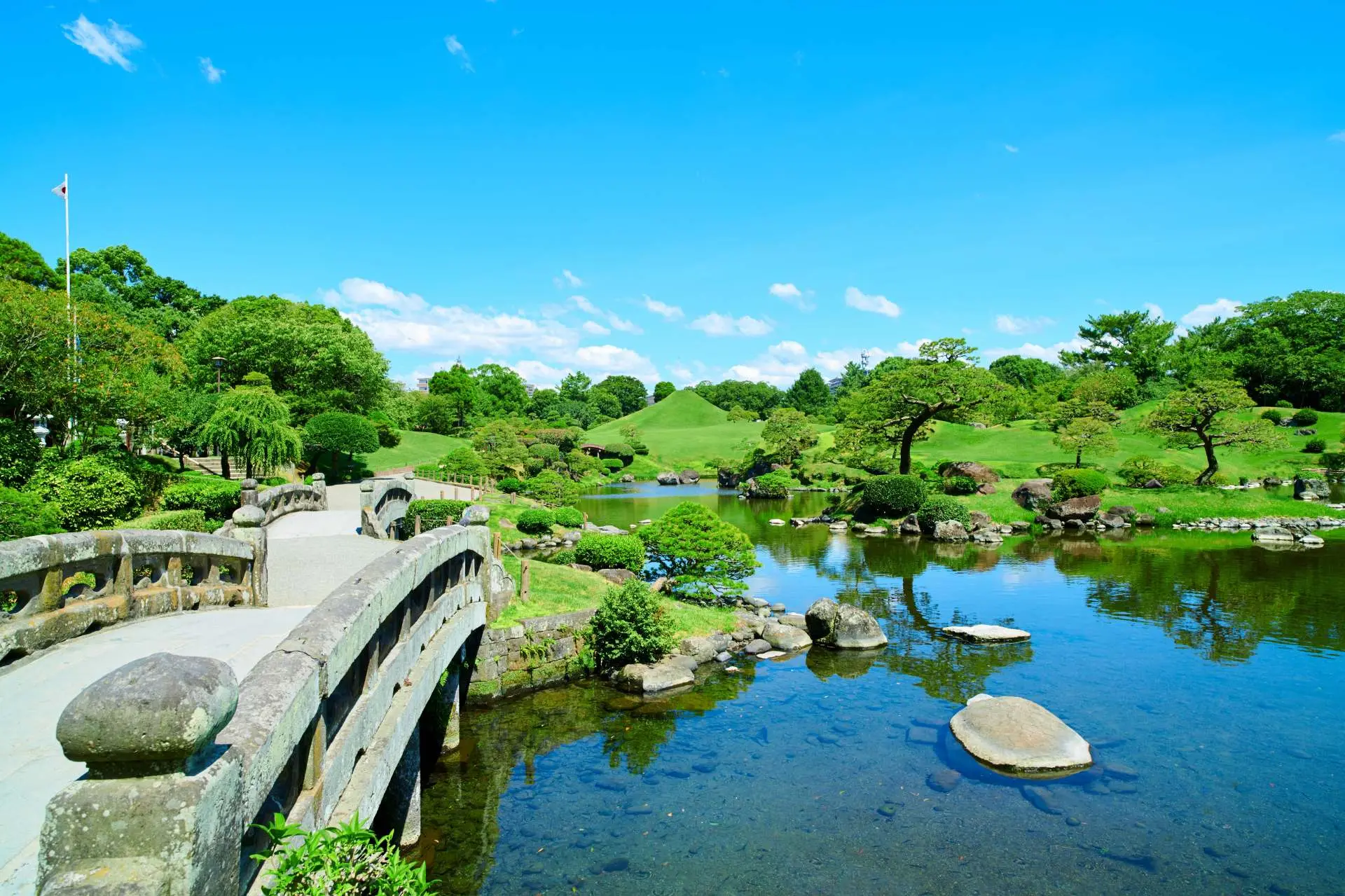
Suizenji Jojuen Garden is one of Kumamoto’s most beautiful gardens — a 17th-century strolling garden built by Lord Hosokawa Tadatoshi, designed to recreate the famous 53 stations of the Tokaido road in miniature scale. The signature feature is the perfectly-shaped artificial Mt. Fuji at the garden’s center, formed from earth and rocks to create a peaceful meditative landscape. Beyond the miniature Tokaido and tiny Mt. Fuji, the garden features carefully arranged ponds with floating water lilies, traditional teahouses for matcha service, ancient cedar groves, and beautifully maintained walking paths. The garden’s spring water source is famously pure — visitors can drink from the wellspring. Tickets ¥400. Cherry blossoms in early April and autumn maples in November are particularly stunning. From JR Kumamoto Station, take the tram + bus (about 30 minutes total).
「水前寺成趣園(すいぜんじじょうじゅえん)」は熊本県の最も美しい名園の一つ——17世紀に細川忠利公が築いた回遊式庭園で、東海道五十三次の有名な宿場をミニチュアスケールで再現するという独創的な設計です。象徴的な特徴は、庭園の中心に完璧な形で築かれた人工富士山——土と岩で形作られた、瞑想的で平和な景観を生み出す名造園美術。ミニチュア東海道と小さな富士山以外にも、睡蓮が浮かぶ精緻な池、抹茶のお点前が頂ける伝統茶室、古杉並木、見事に整備された散策路などが見どころ。庭園の湧水は有名な清水で、訪問者は湧き水を実際に飲めます。入場料400円。4月上旬の桜と11月の紅葉が特に絶景。JR熊本駅から路面電車+バスで約30分。
Insider Tips
現地通の旅の裏ワザ
One of the world’s largest active volcanic calderas (about 25km across). Volcano warning level 1 = closed crater road. Check JMA Aso volcano status before driving up.
阿蘇山は世界最大級の活火山カルデラ(直径25km)。火山警戒レベル1で火口道路閉鎖。気象庁の阿蘇山情報を事前確認必須。
Kumamoto is Japan’s top horse-meat producer (about 40%). Real basashi has 5 cuts (heart, liver, etc.) priced individually. Shimomura is the locals’ spot.
熊本は馬肉生産量日本一(約4割)。本物の馬刺しは5部位(タテガミ・コウネ・ハート・レバー等)の盛り合わせ。下村商店が地元民の本場。
Frequently Asked Questions
What is horse sashimi (basashi) and where to try it?
Basashi (馬刺し) is raw horse meat, a Kumamoto delicacy — bright red, tender, and served with ginger and soy sauce. Try it at izakayas near Kumamoto Station or in the Shimotori arcade.
馬刺しは熊本の郷土料理。鮮やかな赤身を生姜醤油で。熊本駅周辺の居酒屋や下通りで食べられます。
Is Mt. Aso safe to visit?
The Japan Meteorological Agency updates Aso’s alert level daily. When level 1, crater access is permitted. Always check before visiting and follow posted warnings.
気象庁が毎日警戒レベルを発表。レベル1なら火口付近に近づけます。必ず最新情報を確認してから訪問を。
How is Kumamoto Castle’s restoration progressing?
The main keep (天守閣) reopened in 2021. Outer walls and some towers are still being restored through 2037. A restoration walkway lets visitors observe ongoing work.
天守閣は2021年に再公開。外壁・石垣の修復は2037年頃まで続く予定。工事の様子を見学できる通路も設置されています。
Travel Tip
Purchase the ‘Kurokawa Onsen Nyuto Tegata’ (入湯手形, ¥1,500) — a wooden pass that grants entry to 3 hot spring baths of your choice from 30 participating ryokan. Valid for 6 months and a wonderful keepsake.