Akita
Top Akita souvenirs and must-visit travel spots — your complete guide for visitors to Japan. Samurai cherry blossoms, a lake so deep it never freezes, demons at the door on New Year’s Eve — Akita keeps Japan’s most elemental traditions fiercely alive.
武家屋敷の桜・田沢湖の深碧・なまはげの鬼。秋田は日本の原風景と民俗が最も濃く残る雪国です。
Akita is rice country — Akitakomachi rice, kiritanpo hotpot and Inaniwa udon all come from the same fertile land — plus the snowy Kamakura festivals and Nyuto Onsen. For souvenirs, long-keeping Inaniwa udon is the safe gift, while iburigakko smoked pickles and butter-mochi are the local specialties. Akita Station and the airport carry them.
秋田は米どころ——あきたこまち、きりたんぽ、稲庭うどんはどれも同じ豊かな土壌から。雪のかまくらや乳頭温泉も魅力です。みやげは日持ちのよい稲庭うどんが鉄板、いぶりがっこ(燻製のたくあん)やバターもちが地元の名物。秋田駅や空港で一通り揃います。
Recommended Omiyage
おすすめおみやげ 5選
Akita Komachi
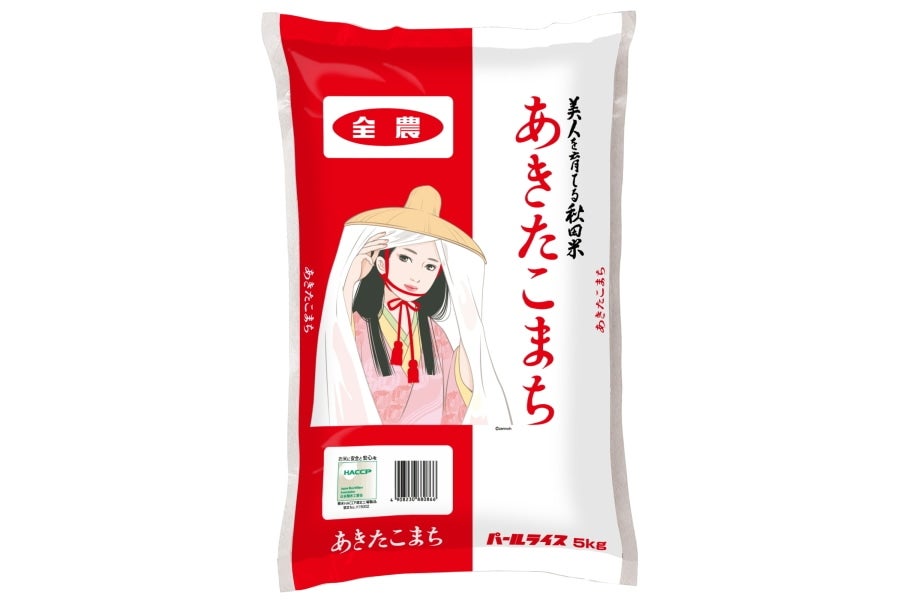
Named after Ono no Komachi — the legendary 9th-century beauty and poet said to have been born in Akita — Akita Komachi rice is one of Japan’s premier rice cultivars, prized for its glossy, slightly sweet, and remarkably fluffy grains. Developed in 1984 to thrive in Akita’s cold climate and pure mountain water, it has earned the top Special-A grade many times — most recently for southern-Akita harvests — and is served at many Tokyo sushi restaurants. Beyond the rice itself, the rice finds its way into local sake brewing, sembei crackers, and skincare products using rice-bran extracts. Look for travel-friendly 2kg gift packs (or full 5kg bags) at the Topico mall in JR Akita Station, Akita Airport, and the Akita Bussan Plaza downtown.
9世紀の絶世の美女・歌人、小野小町の名を冠した「あきたこまち」は、艶やかで甘みがあり、ふっくらと炊き上がる日本屈指のブランド米。秋田の冷涼な気候と清流に適応するよう1984年に開発され、米の食味ランキングで特Aを何度も獲得し(近年も県南産が特A)、東京の高級寿司店でも採用される実力派です。米そのものに加え、あきたこまちで醸した地酒、せんべい、米ぬか由来のスキンケア商品など多彩な派生商品が展開されています。JR秋田駅ビル「トピコ」、秋田空港、アトリオン地下の「秋田県産品プラザ」で、持ち帰りやすい2kgギフト包装や5kg袋が購入可能。
Kiritanpo
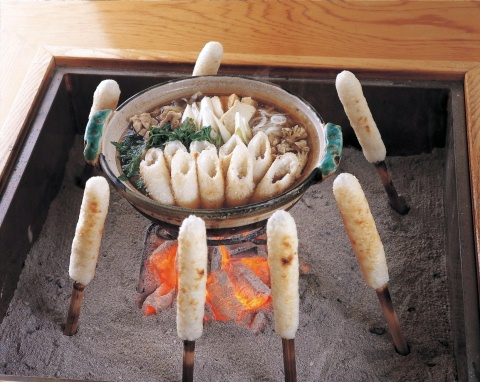
Kiritanpo is Akita’s most distinctive comfort food — freshly cooked Akita Komachi rice is mashed, formed around cedar skewers, then toasted over an open hearth until golden and crispy outside, soft and steamy inside. They’re the heart of “kiritanpo nabe,” a hearty winter hot pot featuring chicken, burdock root, mountain mushrooms, and seri (Japanese parsley) in a rich Hinai-jidori chicken broth. Dating back centuries to mountain hunters and woodcutters who needed portable, high-calorie food, kiritanpo is now Akita’s culinary symbol. Vacuum-sealed kits are available at JR Akita Station, Akita Airport, and roadside stations. Local restaurants serve grilled kiritanpo coated with sweet miso (“miso-tanpo”) as a snack.
秋田を代表するソウルフード「きりたんぽ」は、炊き立てのあきたこまちをすり潰し、秋田杉の串に巻きつけ、囲炉裏や炭火で香ばしく焼き上げた郷土料理。表面はカリッと、中はふっくらと仕上がります。秋田名物の「きりたんぽ鍋」では、鶏(比内地鶏)の濃厚スープに、ごぼう、舞茸、せりとともに煮込まれ、絶品のハーモニーを奏でます。山仕事の猟師や木こりが携帯食として作り始めたのが起源で、今や秋田を象徴する一品。真空パックの鍋セットはJR秋田駅、秋田空港、道の駅などで広く購入可能。ご当地グルメとして甘味噌を塗った「みそたんぽ」も人気のおやつです。
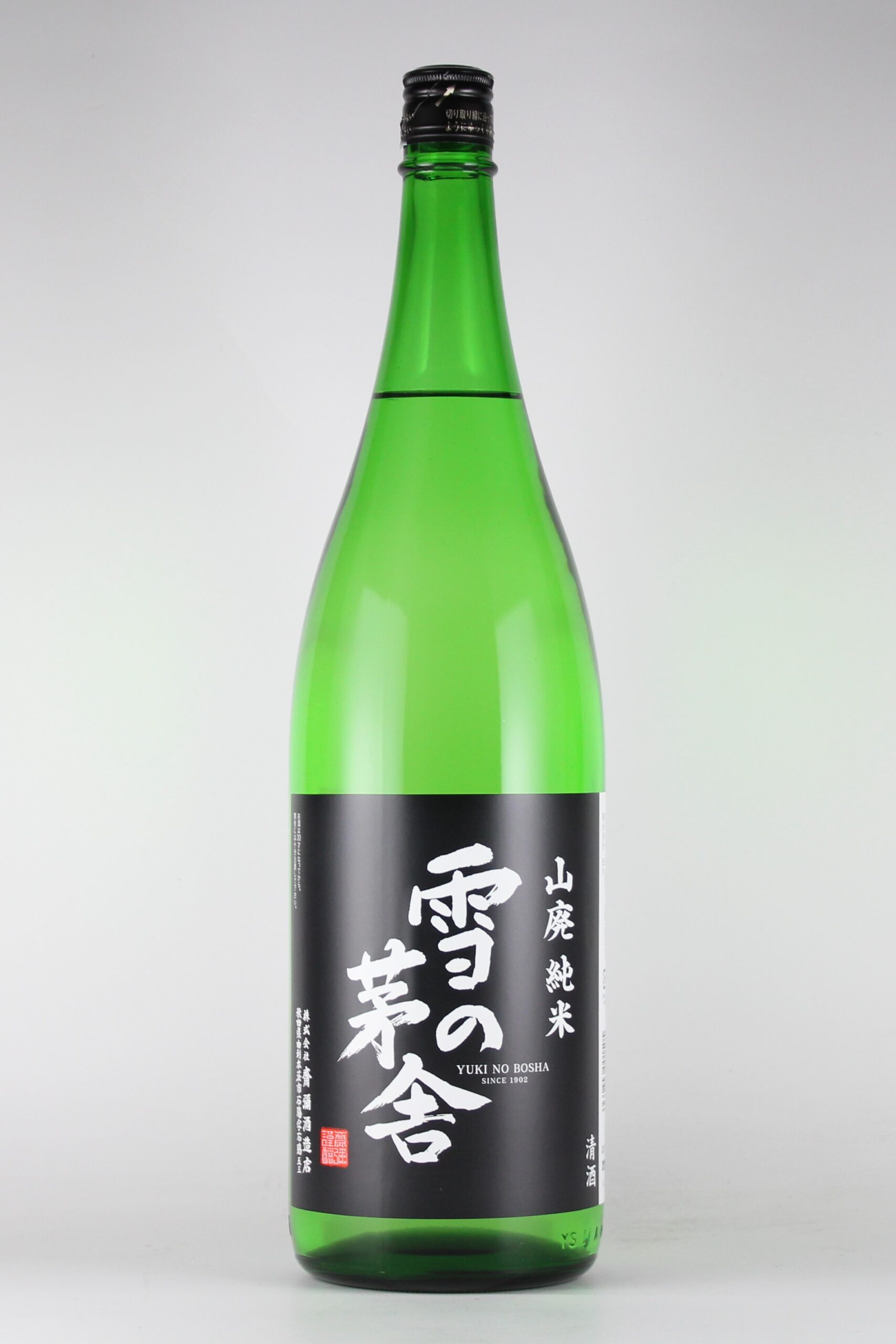
Akita Junmai Sake
Akita is one of Japan’s premier sake-producing regions thanks to its pristine mountain water, locally-grown rice, long winters perfect for slow fermentation, and centuries of brewing tradition. The prefecture is home to legendary breweries like Aramasa (one of the most sought-after labels in Japan), Yuki no Bosha (Cabin in the Snow), Hiraizumi, and Akita Seishu’s flagship Dewatsuru. Junmai (pure rice, no added alcohol) Akita sakes typically have a clean, floral nose, gentle umami, and a crisp finish that pairs beautifully with sushi or grilled fish. Some breweries welcome visitors by advance reservation (popular houses like Aramasa do not), and the Akita Kurasu sake bar inside the Topico mall at JR Akita Station pours tasting flights of local brews.
秋田は日本酒の名産地。雪解けの清冽な伏流水、地元産の酒米、長く厳しい冬がもたらす低温長期発酵、数百年の杜氏文化が、極上の銘酒を生み出します。「新政」(入手困難な人気銘柄の筆頭)、「雪の茅舎」、「飛良泉」、秋田清酒の旗艦「出羽鶴」など、酒好きが憧れる蔵元が県内に集結。純米酒(米と米麹のみで造られたお酒)は、芳醇な香り、優しい旨味、キリッとした切れ味が特徴で、お寿司や焼き魚との相性抜群です。蔵見学は一部の蔵が要予約で受け入れています(新政など人気蔵は見学不可の場合あり)。JR秋田駅ビル・トピコ2階の地酒バー「あきたくらす」では秋田の地酒の飲み比べが楽しめます。
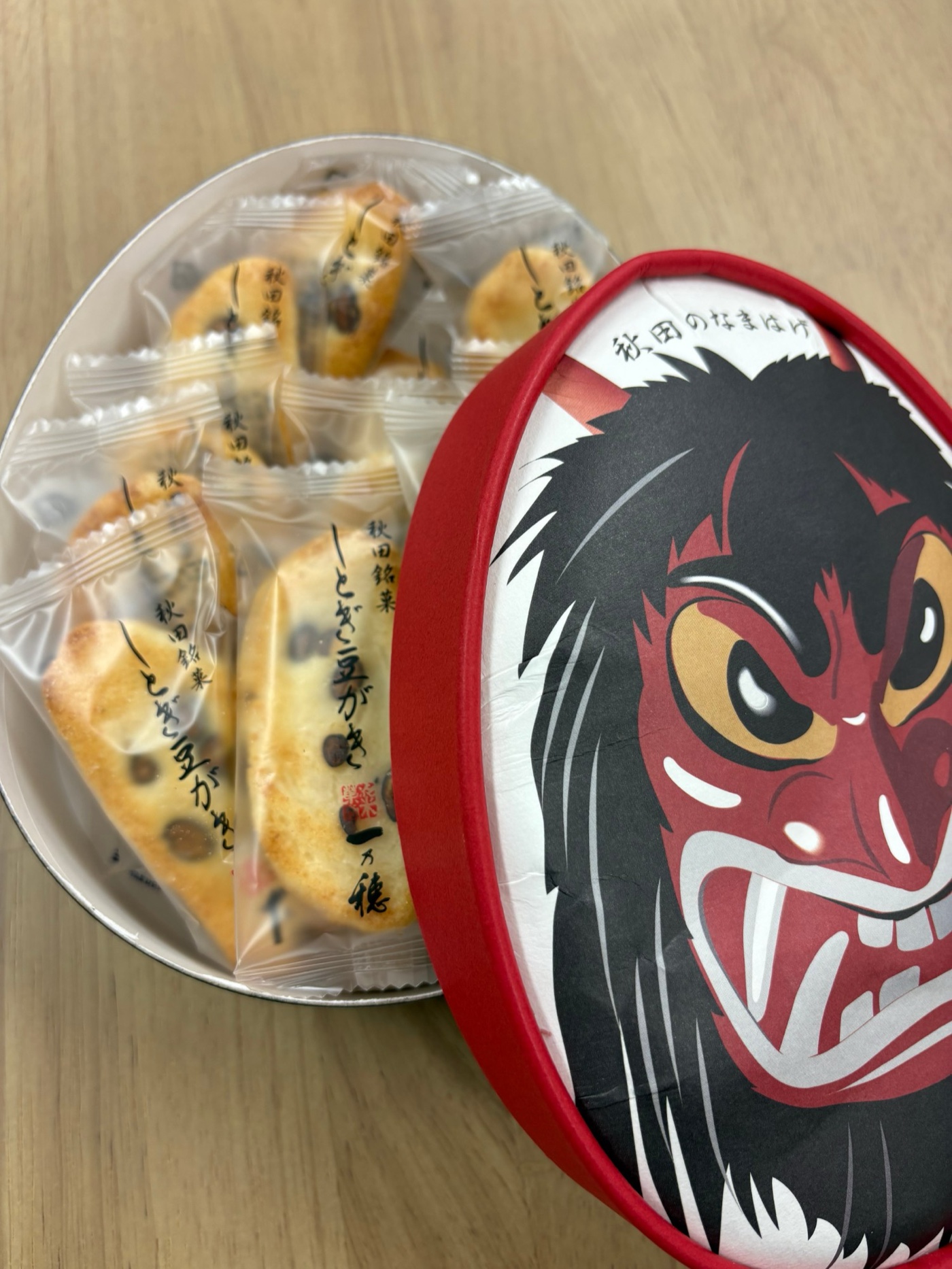
Shitogi Mamegaki (Namahage Box)
Shitogi is an ancient rice offering to the gods — soaked raw rice pounded into flour, kneaded and shaped by hand, said to be the prototype of mochi. Ichinoho, a brand launched in 1993 by Kaorudo, an Akita sweets maker founded in 1922, named its rice crackers after it. Shitogi Mamegaki is black-soybean mochi made with Akita-grown glutinous rice and baked crisp, in the spirit of the region’s traditional hoshi-mochi (dried mochi). Standard bags and boxes run 20 pieces for ¥918 and 30 for ¥1,836 (maker’s shop prices); the red round Namahage Box (14 pieces, ¥1,296) wears the face of the Namahage, the masked New Year’s Eve visitors of the Oga Peninsula who scold the lazy — a tradition inscribed by UNESCO in 2018. Keeps 60 days; the label lists milk and soy among allergens. Buy it at Ichinoho’s shop in Akita City, at Kaorudo’s counter on the 2nd floor of Topico at Akita Station (8:00–20:00), or at Akita Airport.
「しとぎ(粢)」とは、水に浸した生米をついて粉にし、水でこねて丸めた古くからの神前の供え物で、餅の原型ともいわれます。その名を冠した一乃穂は、1922年創業の秋田の菓子店・かおる堂が1993年に立ち上げたブランド。しとぎ豆がきは、秋田県産のもち米に県産黒豆を練り込み、秋田の「干し餅」の風習にならってからりと焼き上げたおかきです。袋入り20枚¥918・箱入り30枚¥1,836(公式通販価格)のほか、赤い丸箱の「なまはげBOX」(14枚入・税込1,296円)は、大晦日に男鹿半島の家々を訪れて怠け者を戒める来訪神・なまはげの面をあしらった定番土産(なまはげ行事は2018年にユネスコ無形文化遺産に登録)。日持ちは60日、原材料に乳成分・大豆を含みます。秋田市内の一乃穂本店、秋田駅ビル・トピコ2階のかおる堂売場(8:00〜20:00)、秋田空港で購入できます。
I’ll admit it — I love bean-studded mochi crackers, so this one was actually a souvenir for myself (laughs). The crackers themselves are a favorite of mine, but honestly it was the packaging that won me over: that Namahage face on the box has real impact! One look and you can picture Akita right away (laughs). As for the crackers inside, they have a gentle hint of salt and a crisp, light crunch — I found myself reaching for a second one before I knew it. Being rice crackers they’re light, and the box itself is compact, so I’d say it’s an ideal souvenir ♪ And of course the shelf life is nice and long!
個人的に豆餅のおかきは大好きで、実は自分用のお土産でした(笑)。商品自体が好きなアイテムでしたが、なんと言っても中身よりパッケージに惹かれましたね!ナマハゲの顔の箱、インパクトあります!これだけで「秋田のお土産やなー」と想像できちゃいますもんね(笑)。お土産本体のおかきは、ほんのり塩味が効いていてサクッとした食感で、つい2個目を食べてしまいます。中身はおかきなので軽いし、パッケージ自体もコンパクトなのでお土産に最適やと思います♪ もちろん賞味期限も十分に長いです!
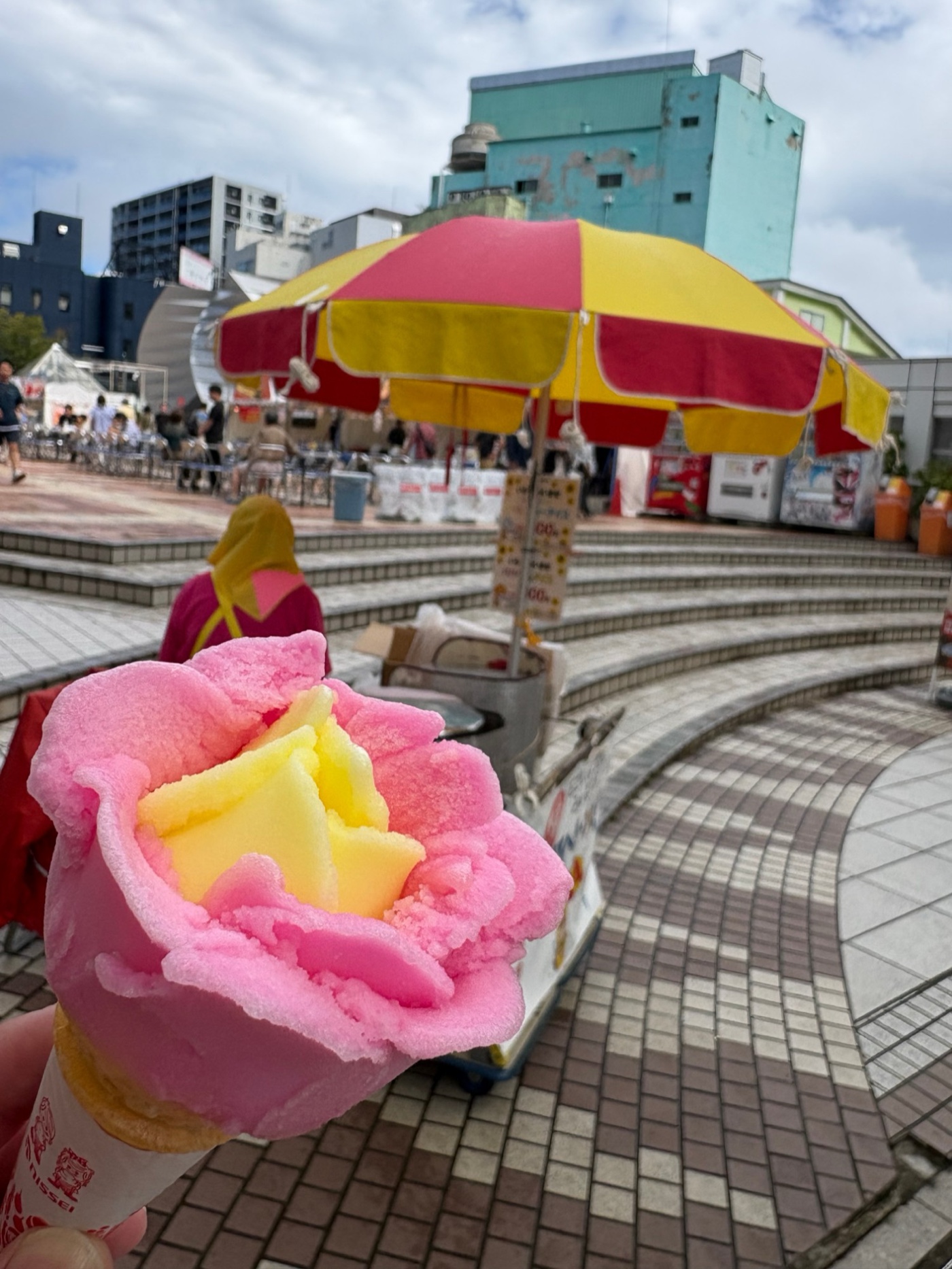
Baba Hera Ice
Akita’s iconic summer treat is the joyful work of “baba” (older country grandmothers) who set up colorful umbrellas at roadsides and flower festivals to scoop pink-and-yellow shaved ice cream into delicate rose blossoms on cones, all using nothing but a flat metal spatula (“hera”). The flavors — strawberry pink and banana yellow, swirled together — are sweet and nostalgic, like a warm childhood summer afternoon. Each “rose” is unique, hand-shaped in seconds with the spatula’s edges. While baba hera ice is best fresh on a hot Akita day (April-October), brands like Kodama Reika now offer take-home cup versions at souvenir shops and online. Look for the bright umbrellas around Lake Tazawa or at festivals.
秋田の夏を彩るユニークな名物「ババヘラアイス」は、田舎のおばあちゃん(ババ)たちが沿道に色とりどりのパラソルを立てて、ピンクと黄色のシャーベット風アイスを金属の専用ヘラだけで美しい薔薇の花びら型に盛り付けて売る郷土の味。イチゴ味のピンクとバナナ味の黄色が螺旋状に重なる、どこか懐かしい味わいです。一つ一つ手作業で形作られる薔薇は二つとして同じ形がない芸術品。ベストシーズンは4〜10月、田沢湖周辺やイベント会場で見かけたらぜひ。最近では児玉冷菓の「バラ盛りカップ」などお土産版が県内土産店や通販で手に入り、自宅でも楽しめます。
At first I wondered, “What on earth is Baba Hera ice?” — and then, by sheer luck, I ran into one ✨ That’s when it hit me: it’s short for “baba (grandma) makes a bara (rose) with a hera (spatula)” (laughs). The grandma wears a bright, flashy outfit, so you can’t miss her. Inside a big silver drum-like container sits a mountain of colorful ice, chilled to the bone. Order one and she builds your rose petal by petal with her spatula 🌹 The taste and texture are somehow nostalgic — it takes you right back to childhood (laughs). It’s not something you can take home as a souvenir, but if you spot a flashy umbrella with a flashy grandma under it, it’s well worth stopping by 👍
初めは「ババヘラアイスとは何ぞや?」と思っておりましたが、奇跡的に出会うことができました✨ ババヘラアイスとは「ばあばが、ヘラで、バラの形のアイスを作ってくれる」の略語だ!と気づいてしまいました(笑)。おばあちゃんが派手な服を着ていて、とても目立ちます。大きな銀色のドラム缶のような容器の中には、カラフルなアイスがキンキンに冷えた状態でたくさん入っています。注文すると、ばあばがヘラでバラの花びらを一枚ずつ作ってくれます🌹 味はどこか懐かしい味と舌触りのアイスで、童心に帰れます(笑)。お土産には適しませんが、派手なパラソルと派手なおばあちゃんを見かけたら、一度寄ってみるのもありです👍
Must-Visit Spots
おすすめスポット 5選
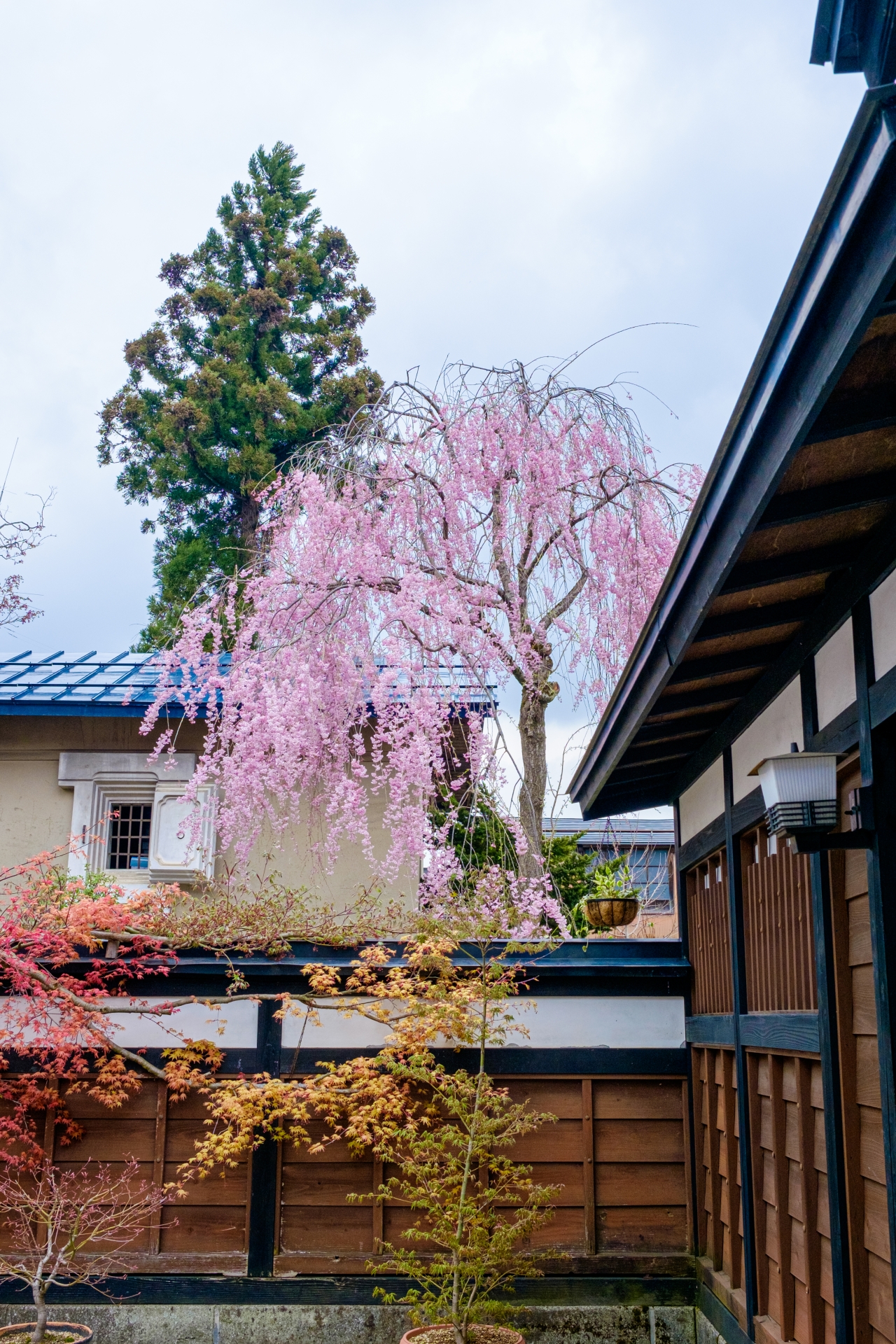
Kakunodate Samurai District
Often called “Little Kyoto of the North,” Kakunodate preserves Japan’s most photogenic samurai street — six preserved Edo-period warrior residences (the street itself was laid out in 1620) lined along a wide avenue beneath ancient weeping cherry trees. The trees are so iconic they’re designated National Natural Monuments, and during late April / early May, the petals form a pink ceiling above the dark wooden gates and earthen walls — a scene many travelers consider Japan’s most romantic. Inside the Aoyagi-ke samurai house (¥500), you can explore preserved armor and gardens. Watch artisans demonstrate cherry-bark craft (kabazaiku, unique to Akita) at the Denshokan Museum (¥300). From JR Kakunodate Shinkansen Station, it’s a 20-minute walk to the samurai district.
「みちのくの小京都」と称される角館は、17世紀の武家屋敷群が完璧に保存された日本屈指の城下町。広い武家通り沿いには江戸時代の屋敷6軒が公開され、頭上には国指定天然記念物の枝垂れ桜が古色蒼然と枝を伸ばしています。4月下旬〜5月上旬の桜の季節には、黒い板塀と土塀に薄紅色の天井がかぶさる絶景に変身。日本一ロマンチックな桜並木との呼び声も高く、海外からの観光客も多数訪れます。青柳家武家屋敷(入館500円)では、甲冑や庭園を見学可能。秋田固有の伝統工芸「樺細工(桜の樹皮工芸)」は、伝承館(入館300円)で職人の実演が見学できます。JR角館駅(秋田新幹線停車)から武家屋敷通りまで徒歩約20分。
Lake Tazawa
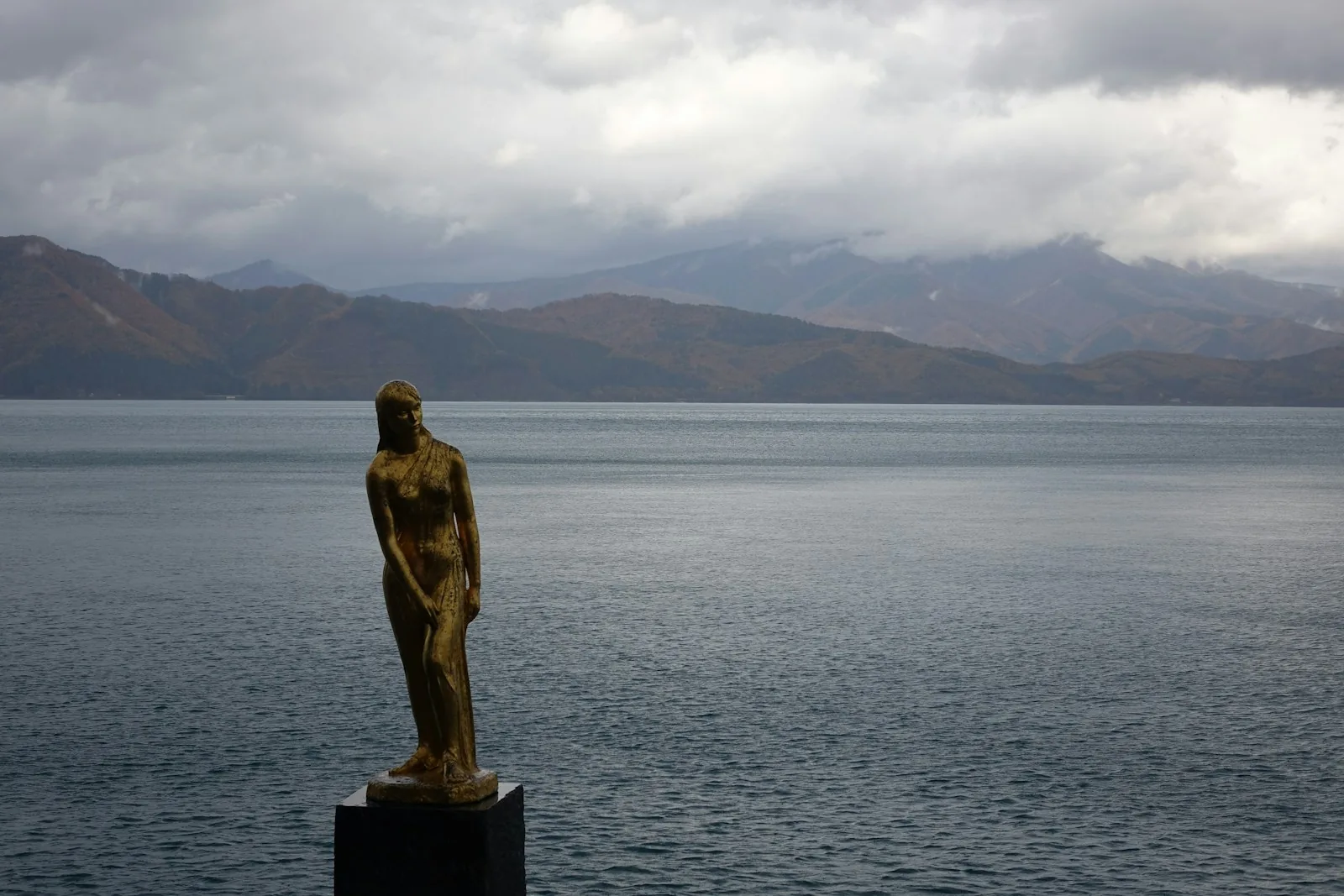
At 423 meters deep, Lake Tazawa is Japan’s deepest lake — an almost circular lake — likely a caldera — whose ultramarine-cobalt water shifts hues with the angle of the sun and the time of day. The local legend tells of Princess Tatsuko, who drank from a magic spring to preserve her beauty forever and was transformed into a dragon-goddess of the lake. A famous golden statue of the princess gleams on the western shore. Activities range from leisurely shore drives, kayaking and SUP rentals, to skiing the surrounding mountains in winter. The nearby Nyuto Onsen hot-spring villages offer one of Japan’s most authentic onsen experiences. From JR Tazawako Station, Lake Tazawa is a 15-minute bus ride.
水深423メートルと日本一深い田沢湖は、ほぼ完璧な円形の湖(カルデラ説が有力)。太陽の角度や時間帯によってウルトラマリン、コバルトブルー、エメラルドへと刻々と色を変える神秘の水面が魅力です。湖には永遠の美を求めて神泉の水を飲み、龍神となって湖に身を沈めた「辰子姫」の伝説が伝わり、西岸には金色に輝く辰子像が湖面を見つめて立っています。湖畔ドライブ、カヤック、SUPなどのアクティビティ、冬は周辺山岳のスキーも楽しめます。すぐ近くの「乳頭温泉郷」は秘湯マニア垂涎の温泉地として有名。JR田沢湖駅(秋田新幹線停車)からバスで約15分でアクセス可能。
Kanto Festival
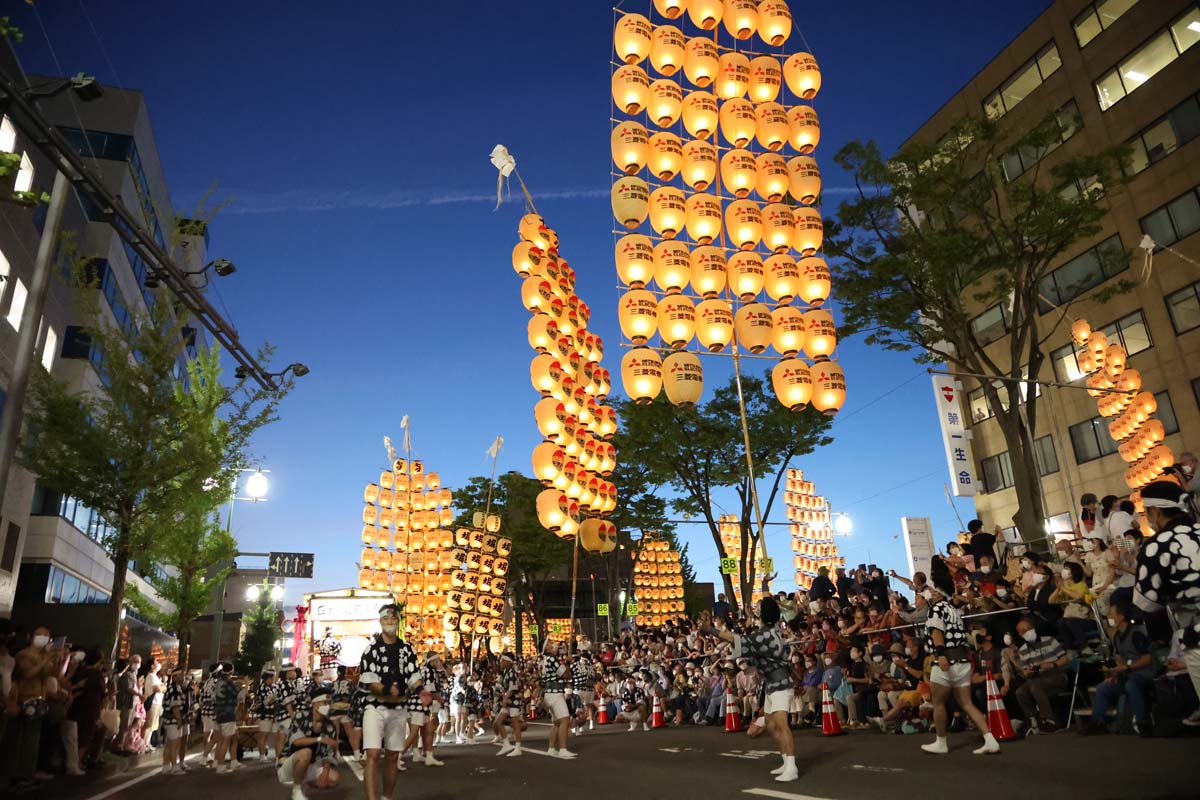
Held August 3-6 every year in central Akita City, the Kanto Festival is one of Tohoku’s three greatest summer festivals — a breathtaking display of skill in which performers balance massive 12-meter bamboo poles hung with up to 46 flickering paper lanterns on their foreheads, hips, shoulders, or palms. Each pole weighs around 50 kg, and a single performer might balance it for several minutes while the crowd chants “Dokkoisho! Dokkoisho!” to the rhythm of taiko drums. The lantern arrangements symbolize rice ears praying for a good harvest. Spectator viewing is free along the main thoroughfare; reserved seats are available from ¥3,500 (2025 prices). Daytime competitions show off the technical skills behind the magic.
毎年8月3〜6日、秋田市中心部で開催される「秋田竿燈まつり」は東北三大祭りの一つ。長さ12メートル、最大46個の提灯を吊した巨大な竹竿燈を、額、腰、肩、手のひらに乗せて演者がバランス芸を披露する圧巻のお祭りです。一本の竿燈は約50kg、上手な演者は数分間も保ち続けながら、太鼓の音と「ドッコイショ、ドッコイショ」の掛け声が祭りを盛り上げます。提灯の配置は稲穂を表し、五穀豊穣を願う伝統が込められています。竿燈大通り沿いの観覧は無料、有料指定席は3,500円〜(2025年)。日中には技術競技会も開催され、神業の裏側が間近で楽しめます。
Nyuto Onsen
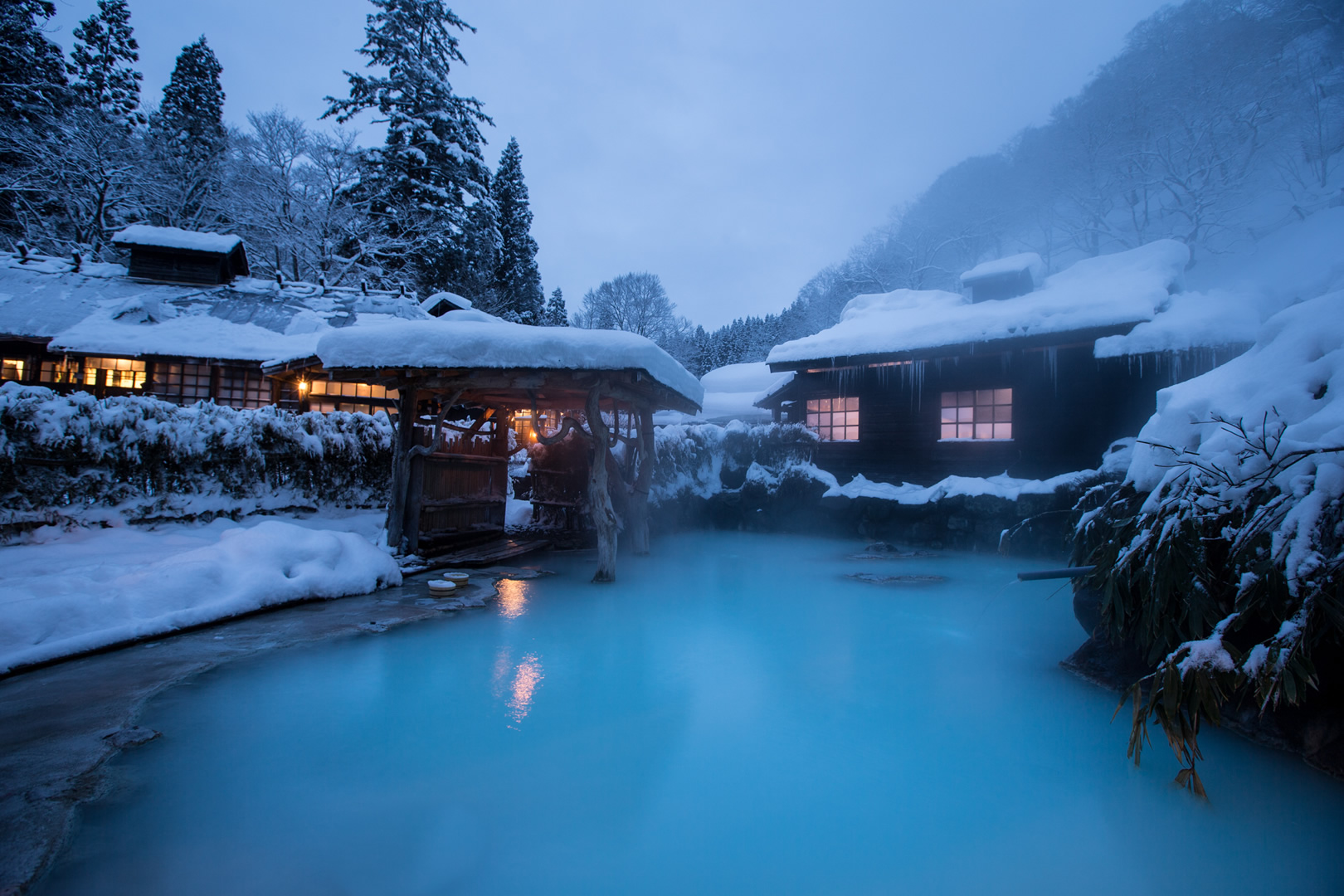
Tucked deep in the mountains beyond Lake Tazawa, Nyuto Onsen-kyo is a cluster of seven historic hot-spring inns scattered through ancient beech forests — collectively considered one of Japan’s most pure and atmospheric onsen experiences. The undisputed flagship is Tsurunoyu, a 350-year-old thatched-roof ryokan with milky-white sulfur baths that have served samurai, sick villagers, and modern travelers seeking quiet healing. Other inns include Magoroku-no-Yu, Ogama-no-Yu, and Kuroyu — each with distinctive water types from sulfurous to iron-rich. The Yumeguri-cho pass (¥2,500, sold to overnight guests only) lets you bath-hop between all seven; day visitors pay per bath. Winter buries the lodges in two to three meters of snow for an unforgettable wonderland experience. Buses from JR Tazawako Station take 50 minutes.
田沢湖の奥山深くに広がる乳頭温泉郷は、原生のブナ林に点在する7つの古い湯宿の総称。日本でも最も純粋で情緒的な秘湯体験ができる温泉郷として知られています。象徴的存在は350年の歴史を持つ茅葺き宿「鶴の湯」で、武士、湯治客、現代の旅人を癒し続けてきた乳白色の硫黄泉が看板の湯です。他にも「妙乃湯」「大釜の湯」「黒湯」など、硫黄泉、鉄分泉などそれぞれ異なる泉質を持つ宿が揃います。湯めぐり帖(2,500円・宿泊者限定)で7宿を全て巡れる仕組みも(日帰りは各湯700〜1,000円)。冬は2〜3メートルの積雪に埋もれた幻想的な雪国世界に。JR田沢湖駅からバスで約50分。
Namahage Museum
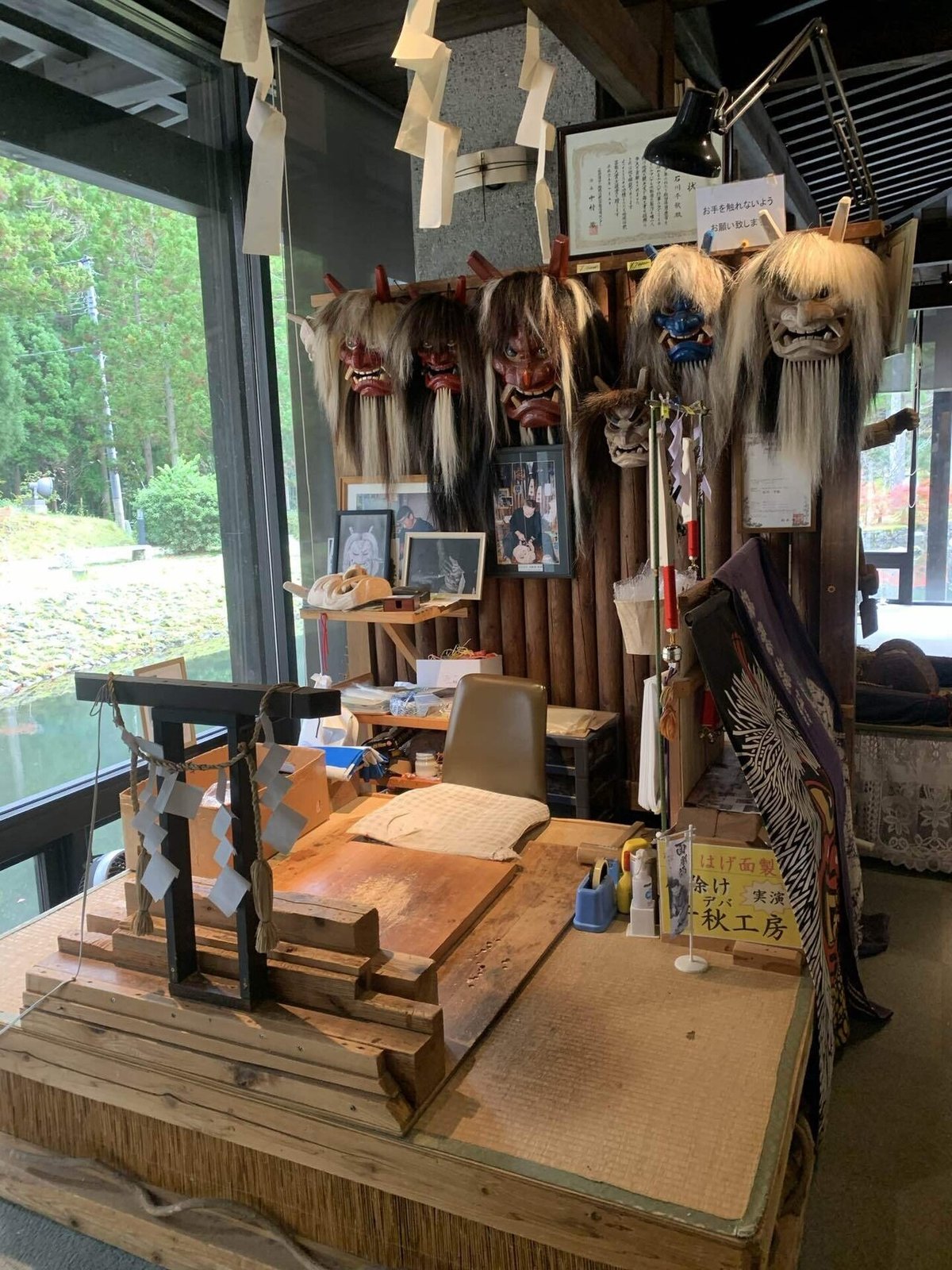
Located on Oga Peninsula, the Namahage Museum is the definitive way to understand Akita’s most extraordinary folk tradition. The museum displays more than 150 real Namahage masks from villages across Oga — each region’s masks have unique shapes, colors, and personalities, ranging from terrifying horned beasts to almost cartoonish faces. The adjoining “Oga Shinzan Folklore Museum” recreates a traditional thatched farmhouse where visitors can witness a real Namahage New Year’s Eve ritual reenacted by costumed performers. The drama is intense: stomping, shouting, and probing children for misbehavior. Combined ticket with the folklore museum: ¥1,100 (museum alone ¥660). Best paired with Akita Sake, hot pot, or a stay at the Oga Onsen district. About 90 minutes from JR Akita Station (Oga Line plus the reservation-only Namahage Shuttle).
男鹿半島に建つ「なまはげ館」は、秋田屈指の異色民俗・ナマハゲを徹底的に学べるユニークな施設。男鹿地方の集落ごとに異なる、150枚以上のナマハゲ面が一堂に展示されており、恐ろしい角の鬼から愛嬌のある顔まで地域による個性が一目で分かります。隣接する「男鹿真山伝承館」では、伝統的な茅葺きの古民家を再現した中で、衣装姿の演者による大晦日の本格的なナマハゲ訪問儀礼の実演が観賞可能。床を踏み鳴らし、雄叫びを上げ、子供たちを問い詰める迫力は圧巻です。共通券1,100円(なまはげ館単独660円)。秋田の地酒、きりたんぽ鍋、男鹿温泉での宿泊と組み合わせるのが鉄板コース。JR秋田駅から約90分(男鹿線+前日要予約の「なまはげシャトル」)。
Insider Tips
現地通の旅の裏ワザ
Authentic GI-certified iburigakko (smoked daikon pickle) is smoked for days over nara-oak and cherry logs. Find it at Komachi-en inside Akita Station or the Bussan Plaza downtown.
本物のいぶりがっこはナラや桜の原木で数日燻すGI登録の伝統製法。秋田駅「こまち苑」やアトリオンの県産品プラザで購入可。
The Yumeguri-cho pass (¥2,500, overnight guests only) covers one bath at each of the 7 inns plus the shuttle bus — day visitors pay ¥700–1,000 per bath instead.
乳頭温泉郷の「湯めぐり帖」は¥2,500で7軒全制覇+巡回バス乗り放題(宿泊者限定)。日帰りは各湯¥700〜1,000の個別払い。
Frequently Asked Questions
What is the Namahage tradition?
On New Year’s Eve (Dec 31), men dressed as Namahage demons visit homes across the Oga Peninsula, roaring ‘Are there any lazy children here?!’ to frighten children into obedience and wish the family good fortune. It’s listed as UNESCO Intangible Cultural Heritage.
大晦日の夜、男鹿半島の各家になまはげが訪れ「怠け者はいねがぁ〜」と叫ぶ伝統行事。ユネスコ無形文化遺産に登録されています。
How do I book Nyuto Onsen?
Each of the 7 inns is independently run. Tsurunoyu (鶴の湯) is most famous and books out months ahead. Check each inn’s website directly. Overnight guests can buy the ¥2,500 Yumeguri-cho pass covering all 7 baths; day visitors pay per bath (around ¥700–1,000).
7軒それぞれが独立経営。鶴の湯は数ヶ月先まで予約が埋まる。宿泊者限定の「湯めぐり帖」(2,500円)で全湯巡りが可能。日帰りは各湯ごとに支払い(700〜1,000円)。
When are the cherry blossoms in Kakunodate?
Late April to early May — usually a few days after Hirosaki. The weeping cherry (shidarezakura) trees along Bukeyashiki-dori are centuries old — some over 300 years — and 162 are National Natural Monuments.
例年4月下旬〜5月上旬。武家屋敷通りの枝垂れ桜は樹齢300年を超えるものもある古木で、162本が国の天然記念物。弘前より数日遅く咲くことが多い。
Travel Tip
Combine Kakunodate and Lake Tazawa in one day — they’re 20 minutes apart by local train on the Akita Shinkansen line. Rental bicycles near the Tazawako lakeside bus stop make for a scenic lake loop (about 20km, 2–3 hours).